










Making Cotton Learning Journey
Cotton is not made; it is a plant which grows in warmer parts of the world. Cotton plants have yellowish pink flowers which bloom very briefly. The seed bearing part of the plant is known as the boll and it is this which is picked to make cotton. For thousands of years cotton has been harvested, cleaned, spun, woven, bleached and dyed to make an astonishing variety of different items.
Click on the steps below to learn about cotton through history, cleaning and carding, spinning, weaving, bleaching and dyeing.
Click on the steps below to explore.
 |  |  |  |  |  |
|
Making Cotton Learning Journey Step 5: Bleaching
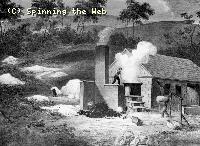
Ancient Egypt was renowned for both coloured linens and cottons and 'whites'. The Greeks had also mastered the art of bleaching according to Pliny. Plant and herbal extracts were used in the process. In more recent centuries, down to about 1750, the Dutch had a virtual monopoly on the bleaching trade. The methods of bleaching before the mechanisation of the Industrial Revolution were quite lengthy and could take a whole summer. Cloth was soaked in a lye (a liquid leached from wood ash) and then for a further week in a potash lye. This process was known as 'bucking'. It was then washed and placed under pressure in wooden barrels of buttermilk for another week. Afterwards the cloth was spread out on the grass of a bleach field or on a frame supported by tenter posts, to dry and bleach in the sunshine (crofting). When it was dry the cloth would be soaked in sour milk for several days, washed and crofted again. This whole process was repeated several times until the cloth had acquired the requisite degree of whiteness. While the cloth was spread out drying it was vulnerable to theft. This was known as croft breaking but the penalty for stealing cloth in this way was severe and was usually execution. See also on this website: Industry: machines and processes - finishing |
 | |
| Associated Objects | |
| |
| Related Narratives | |
| |