










Selling Cotton Learning Journey
Selling is as important as production because without markets and the means of exchanging wares for money or goods there is no profit or benefit for the producer. If products are sold regionally, nationally and internationally, selling involves a complex network of manufacturing, 'middle-men', warehousing, trading and promotion. Cotton manufacture had simple beginnings but it became a global product.
Click on the steps below to explore.
 |  |  |  |  |  |
|
Selling Cotton Learning Journey Step 6: Cotton on the Internet
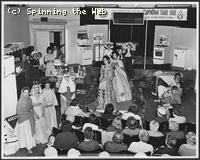
On 8th December 2000 the cotton industry entered the 21st century with the establishment of the world's 'first complete on-line market place', called, appropriately enough, The Seam. During The Seam's first week of trading 13,000 bales of cotton were sold on-line and 100,000 bales were on offer. Sellers upload bale data so that buyers can assess quality, price and location. The Seam's vision is to be 'a comprehensive electronic market place for the global textile fibre industry.' eBay also has an online market place or exchange for buying and selling cotton fabric. Search engines currently bring up around 2,000 sites when 'selling cotton' is entered in the search box. Dress goods, children's clothes, period costumes, bedding, soft furnishing, cotton wastes, and cotton market information are currently some of the items available through these sites. The development of on-line cotton market places/exchanges seems to have brought the cotton mills and machinery of the Industrial Revolution full cycle; but today a selling point for cotton goods on the Internet is to advertise them as 'hand-made', 'hand-spun', hand-woven', 'hand-stitched'; just as in the days when the travelling salesmen or chapmen rode from village to village buying and selling their cotton wares. research www.theseam.com GG |
 | |
| Associated Objects | |
| |
| Related Narratives | |
| |