










Selling Cotton Learning Journey
Selling is as important as production because without markets and the means of exchanging wares for money or goods there is no profit or benefit for the producer. If products are sold regionally, nationally and internationally, selling involves a complex network of manufacturing, 'middle-men', warehousing, trading and promotion. Cotton manufacture had simple beginnings but it became a global product.
Click on the steps below to explore.
 |  |  |  |  |  |
|
Selling Cotton Learning Journey Step 3: Cotton trade
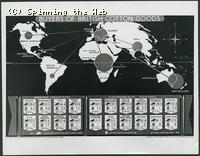
(letter of introduction given by Queen Elizabeth I to the East India Company). English cotton traders built up world wide markets for their products. One of the most successful companies, and the first 'multi-national', was the East India Company. The first subscription on 22nd September 1599 raised £68,373 (worth nearly £9 million in 2002) and the Company's Royal Charter was signed by Queen Elizabeth I on 31st December 1600. The East India Company's first major market place was at Bantam, an area which then covered most of western Java and southern Sumatra. From here the Company traded extensively with India and China, and, from the early 19th century, Japan. The 'fruits' to which Queen Elizabeth referred included silk, Indian cottons (chintzes and muslins), pepper, spices, tea and opium. English woollen broadcloth and (later) guns, were traded in return. Imports of Indian cottons and, in 1773, Richard Arkwright's success in producing the first machine made calico, threatened the wool and silk trades, so heavy duties were imposed on cotton. Arkwright led a successful campaign for exemption from duties on calico but in the 1820s duties were re-imposed on printed calicoes. During the 19th century cotton was imported and exported from and to every continent in the world, notably North America, which was Lancashire's primary source of raw cotton, and Asia. India's colour fast dyeing techniques and brilliantly coloured designs were in great demand. China also had abundant supplies of raw cotton. In the 21st century Asia has supremacy in the raw cotton and cotton goods trades; and, ironically, Indonesia, the former site of Bantam, is now one of the world's major importers of cotton. |
 | |
| Associated Objects | |
| |
| Related Narratives | |
| |