


















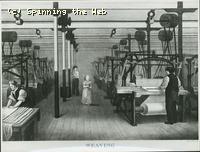
The Age of the Factory was also an period of change and unrest, following in the wake of Napoleonic revolution and American independence. At a local level, the Peterloo Massacre was fresh in the memories of Manchester people. This period saw the emergence of an industrial working class, together with the advent of strikes, such as the general turn out in 1842 and later the Preston 'lock out' of 1853-4. This was also an age of reform, with the passing of the first Parliamentary Reform Act in 1832 (driven on by Michael Sadler) and the first Factory Act in 1833, which regulated child labour in cotton mills through a new Factory Inspectorate. A decade later came a watershed in factory legislation with the passing of the Ten Hours Bill in 1847. Textile technology also moved on rapidly in the Age of the Factory. In 1842, Kenworthy and Bullough had patented improvements to the powerloom which brought the culmination of the power loom, the Lancashire Loom, which was to remain the mainstay of Britain's weaving industry for the rest of the 19th Century. The following year, the 61 year-old restrictions on the exportation of textile machinery were lifted, allowing countries such as India, Japan and Brazil to quickly equip their own cotton mills. In 1850, calico printer, handloom weaver and bobbin-winder John Mercer perfected a technique for giving cotton a silk-like lustre by treating the material with caustic soda. Britain's economic confidence was bolstered by the Great Exhibition of 1851, but such self-assurance was misplaced as its biggest industry would discover within a decade. The dyeing of textiles was greatly advanced by William Perkin's discovery of mauve aniline, the first commercially produced synthetic dyestuff. With the power of the factory seemingly assured and the numbers employed in cotton factories ever greater, it is ironic that the cotton industry was about to receive its first wake-up call in the form of the Lancashire Cotton Famine of 1861-5. NR View the The Age of the Factory collection to find out more > |
 | |
| Associated Images | |
| |
| Related Narratives | |
| |