









Holidays Learning Journey
Holidays as we know them today were an invention of the industrial revolution. Before the factory people did not think of leaving their village and home for a week to stay elsewhere, they had chores and animals that could not be left alone.
Holy days were single days of celebrations, and the entertainment would travel to the people in the form of a travelling fair or troupe of players, which would set up on the village green and entertain for a few coppers or some food and drink.
The factories, with their unhealthy atmosphere and long days of work provided no time for enjoyment, the only days of freedom allowed were Sundays, Christmas Day and Good Friday.
So how did holidays as we know them develop? Follow the learning journey to see how our great grandparents celebrated and saved for their leisure time.
Click on the steps below to explore.
 |  |  |  |  |  |
|
Holidays learning journey Step 3: High Days and Processions.
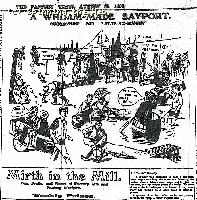
The factory system had no need of remembrance of times of the year, all days were the same to the machines that drove the factory, and so many of the old customs died out. Some of the smaller towns kept their own versions of these celebrations such as pancake day or egg rolling at Easter, but generally any celebrations would have to be confined to Sundays when the factory allowed the people a rest from their labour. A patriotic and exciting celebration was bonfire night. Local mills would donate old packing cases and skips that were beyond repair to fuel the fire, while the children hawked their effigy of Guy Fawkes around the district urging people to "remember, remember the fifth of November", and begging a "penny for the Guy". The women would get together to make potato pie, and bake potatoes in the embers of the fire, and on top the bad old guy was burned. One celebration that suited the system well was the Whit Walks or processions of Witness, inaugurated in Manchester in 1801. Most people would buy, or make new clothes especially for the day, thus helping the commerce of the town. The girls dressed in their new white, cotton dresses, the boys in crisp white shirts or even all white sailor suits, would meet up at the local school or church and in smart white lines they would follow the banner. At the head of the procession a band led the way around the parish, until they would end up back at the starting point for tea and buns followed by an afternoon of fun and games. Which celebrations are still remembered today? How are they celebrated? |
 | |
| Associated Objects | |
| |
| Related Narratives | |
| |